
Qigong Sensory Therapy (QST)
For children with Autism, Sensory Processing Difficulties and Down Syndrome
A gentle, non-invasive, affordable & effective therapy
Welcome to QSTA, we are so happy you have found us!
We are a group of Australian Occupational Therapists who are passionate about introducing Qigong Sensory Therapy (QST) as an effective intervention to help children reach their potential, and supporting families to have more ease and joy in life.


What is Qigong Sensory Therapy?
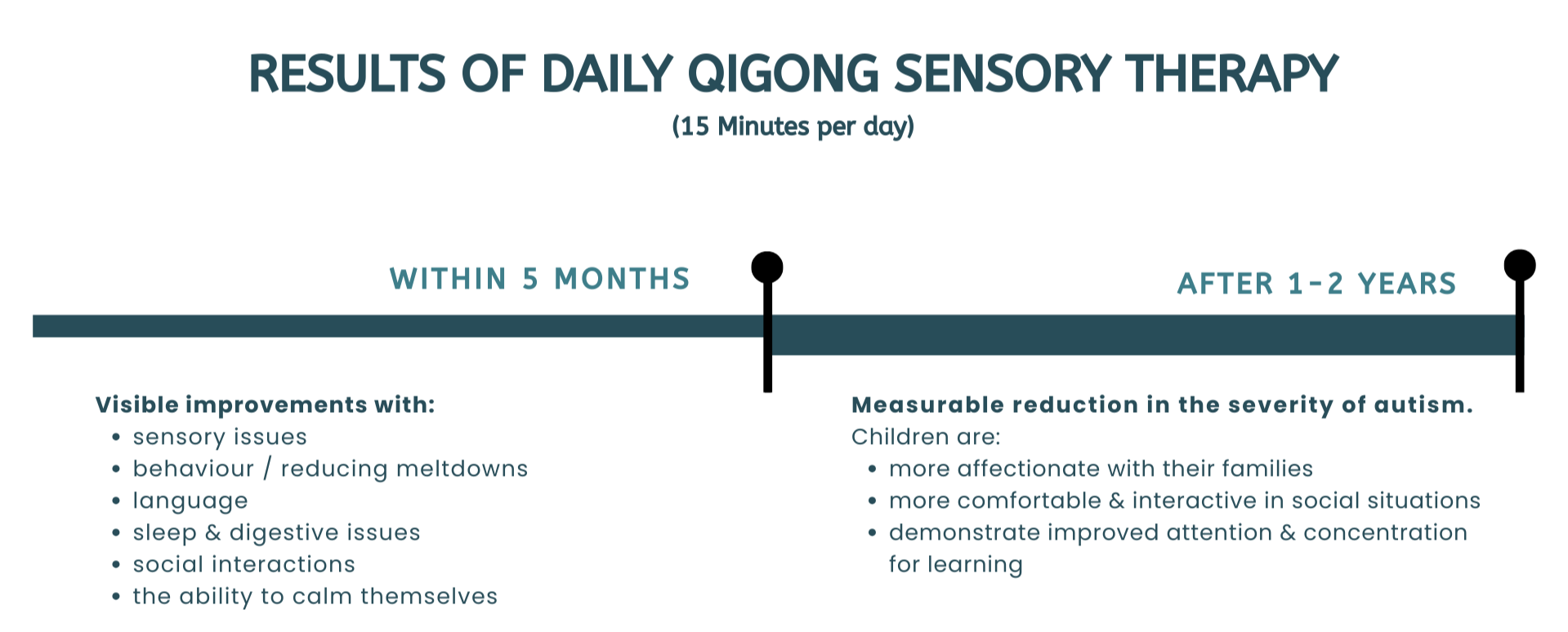
Qigong Sensory Therapy (QST) is an innovative and evidence-based therapy built on 15 years of research studies and shown to be effective at improving all aspects of functioning for children with autism. This includes challenges children may face in the areas of sensory processing, behaviour, social skills, self-regulation, and communication.
Therapists train parents and caregivers to provide a daily, specialised touch/massage protocol consisting of 12 movements, which takes around 15 minutes. Results can often be apparent in as few as 30 days of treatment.
With this massage, children start to relax, become more aware of others and their environment, and are more receptive to connecting socially with others. Improvement is seen in the areas of sensory processing, behaviour, language, sleep, digestion, toileting and the ability to calm and self-regulate. Over time, transitions become easier, children are more willing to engage in home and school activities, and their attention and concentration improve for learning. Research shows that parental stress is also considerably reduced, and the child-parent bond is strengthened.
Qigong Massage for Autism - A Different Sense of Touch
“The phrase to be comfortable in your own skin is an old one that exists in many languages. It tells us something about how we function as human beings and how we relate to one another. A person who is comfortable in their own skin is both comfortable with themself and relaxed in company. They are easy to talk to and talk easily to others. The idea of being comfortable with ourselves, and others includes all of our senses because we use our senses to know ourselves and to relate to others. Children on the autism spectrum don't feel comfortable in their skin. Massage is a way to give that comfort back to them”.
— Dr Louisa Silva M.D., M.P.H